February 4, 2015
A clear understanding of how your customers use their mobile devices to interact with your brand and make key decisions is essential to an effective marketing strategy.
Now, with IBM’s Lifecycle Analytics solutions, you can build milestones specifically for users of a particular model of mobile device or tablet. Then, these milestones can be used to automatically segment and interact with those customers.
If you’re not familiar with IBM’s offerings in this area, we have two customer lifecycle products designed to provide insight throughout the full customer journey. IBM Digital Analytics Lifecycle is designed for our IBM Digital Analytics customers and IBM Tealeaf cxLifecycle is available for IBM Tealeaf customers.
Both products have the unique ability to track customers over time, across multiple sessions on their way to an eventual purchase or an abandonment of the process. Customers can be tracked by events you define, called milestones, to see how they are progressing over time.
Segments of customers can be created based on the criteria for each milestone. Then, you can determine the best actions to take with customers who successfully move from one milestone to the next and with those who don’t.
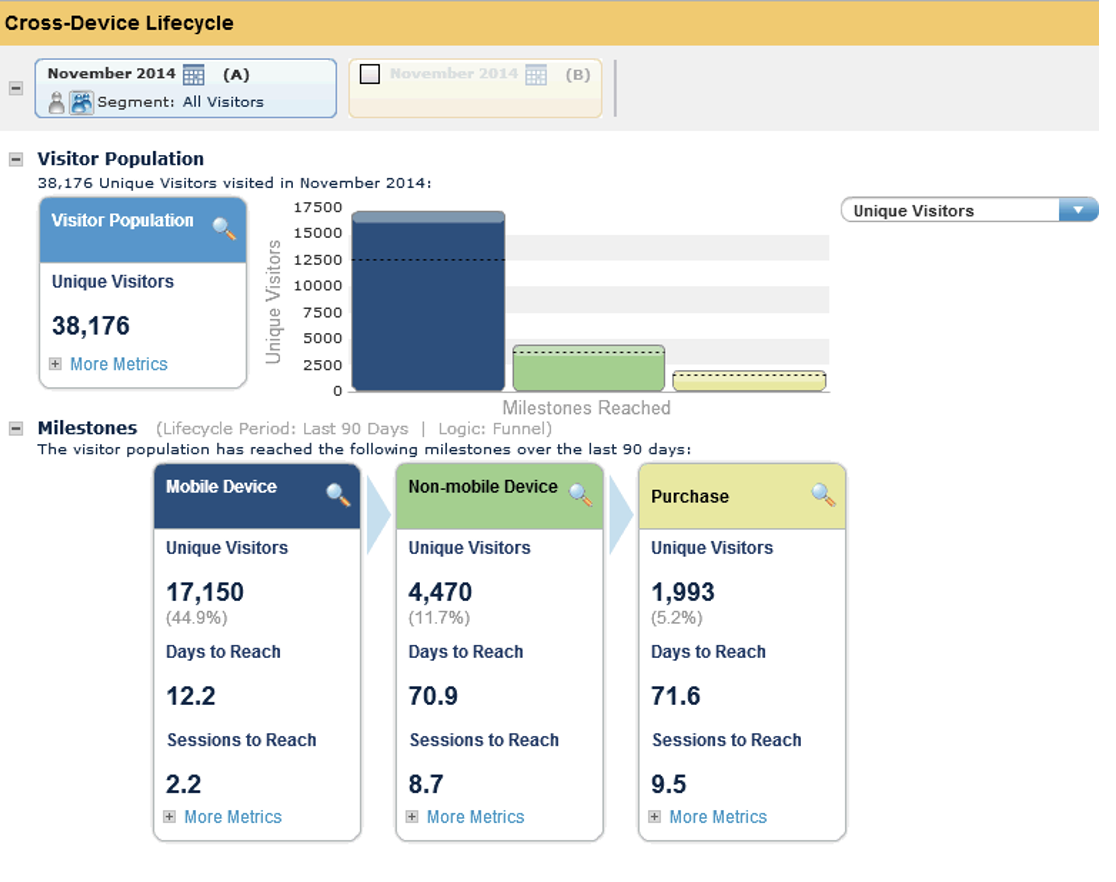
With the latest release of Lifecycle Analytics, three types of mobile device criteria can be used for building milestones:
Whether or not a mobile device is being used
Mobile device type (e.g., phone, tablets, etc.)
Mobile device model (e.g., Apple iPad, Apple iPhone, Samsung Galaxy, Google Nexus, Amazon Fire, Amazon Kindle, etc.)
You can now build milestones specifically for users of a particular model of mobile device or tablet. Then, these milestones can be used to automatically segment and interact with those customers.
This feature will lead to a much better understanding of how customers are using their mobile devices to interact with your offerings. It will allow you to uncover whether your customers are using multiple devices, as well as insight into patterns or common sequences of usage across different mobile devices. For example, you may find that certain segments of customers typically click on an email offer from their smartphone, but later read a blog post on your site using their tablet and might ultimately make their purchase on their desktop.
These solutions allow you to take a close look at how your customers use multiple devices in the purchase process. Additionally, they can pinpoint the device or devices non-migrating customers are using when they abandon the purchase process. You can now test your hypotheses to see if they match actual user behavior.
This information will also arm you with powerful insight into the best touchpoints to invest in, on a segment-by-segment basis, at any given point on the journey toward purchase.
This new capability can give you one more tool to effectively understand and take action with customers at just the right time in their lifecycle journey.